
Grubbly Farms has quickly become one of the most talked-about names in alternative pet nutrition, especially among backyard chicken keepers in the United States. The company stands out because it does something unusual in a very practical way: it turns insects into feed. Instead of relying only on traditional ingredients like soy or fishmeal, Grubbly Farms uses black soldier fly larvae to create protein-rich food for poultry and pets.
For many people searching “Grubbly Farms,” the main goal is simple. They want to understand what the company actually does, whether its products are safe, and why insect-based feed is becoming popular. The answer lies in a mix of nutrition science, sustainability concerns, and changing expectations about animal food production.
What Grubbly Farms is and what it offers
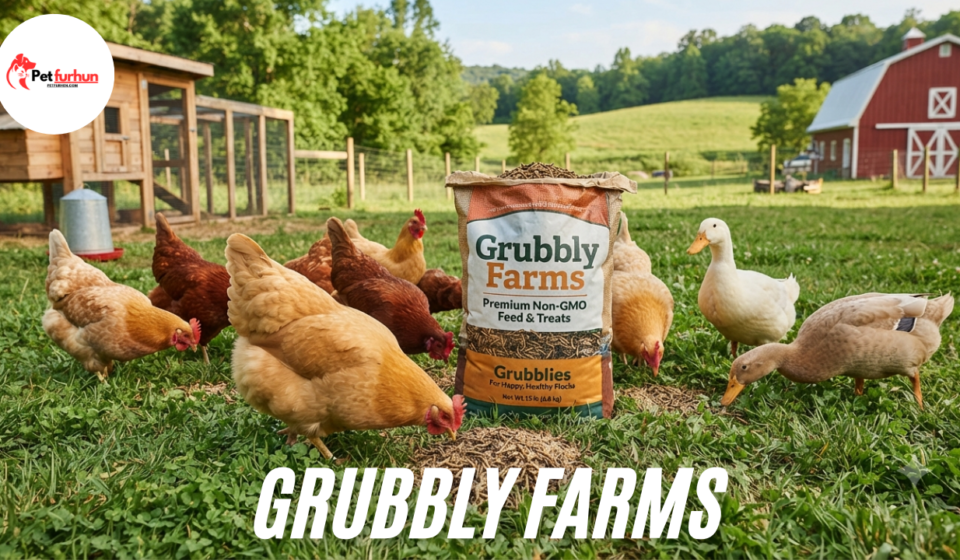
Grubbly Farms is a pet nutrition company focused mainly on feed for chickens and backyard birds. Its core product line is built around insect protein, especially black soldier fly larvae, which are dried and processed into feed and treats. These larvae are naturally high in protein, healthy fats, and essential nutrients that support growth, egg production, and overall bird health.
The company produces a range of products designed for different needs, including complete feeds, supplemental feed blends, and treats. Chicken owners often use these products as part of a daily feeding routine, either mixed with standard feed or offered separately as a nutritional boost.
What makes Grubbly Farms different from traditional feed brands is not just the ingredients, but the philosophy behind them. Instead of treating insects as an unusual ingredient, the company treats them as a normal and efficient source of nutrition.
How black soldier fly larvae became the core ingredient
At the heart of Grubbly Farms’ model is the black soldier fly larva. This insect has gained attention in agriculture because of its ability to convert organic waste into high-quality protein very efficiently. The larvae grow quickly and feed on food byproducts that would otherwise go to waste.
Once harvested, the larvae are dried and processed into feed ingredients. The result is a nutrient-dense protein source that can compete with more traditional animal and plant-based feed ingredients. For chickens, this matters because their natural diet in the wild already includes insects, seeds, and small organic matter. Insect-based feed simply mirrors that natural behavior in a controlled and consistent way.
Another reason black soldier fly larvae are important is their nutritional balance. They contain amino acids, fats, and minerals that support egg production and feather health. This makes them especially attractive for backyard chicken keepers who want healthier flocks without relying on heavily processed feed formulas.
Why Grubbly Farms focuses on sustainability
Sustainability is one of the strongest themes in Grubbly Farms’ identity. Traditional animal feed production often depends on large-scale agriculture, including crops like soy, which require significant land, water, and fertilizer inputs. Fishmeal, another common protein source, depends on wild fishing industries that are under increasing pressure.
Grubbly Farms takes a different approach by using insects that can be raised on organic food byproducts. This reduces waste and helps create a more circular system where food that might have been discarded is instead converted into nutrition for animals.
This model appeals to customers who are increasingly concerned about environmental impact. Even if sustainability is not the primary reason someone buys chicken feed, it often becomes an added benefit that strengthens the appeal of the product.
The company also highlights the efficiency of insect farming. Black soldier fly larvae require less land and water compared to traditional protein sources, making them a more resource-conscious option in the broader feed industry.
How chicken keepers use Grubbly Farms products
Most customers come to Grubbly Farms through backyard chicken keeping. These are individuals or families who raise small flocks for eggs, companionship, or both. For them, feed quality has a direct impact on egg production, shell strength, feather condition, and overall bird behavior.
Grubbly Farms products are typically used in two ways. Some chicken keepers replace part of their regular feed with insect-based formulas, while others use the products as supplements or treats. The idea is not always to completely change a flock’s diet, but to improve it by adding more nutrient-dense ingredients.
Many users report that chickens are naturally drawn to the taste and texture of dried larvae. This is not surprising, since chickens instinctively forage for insects when given the opportunity. The product fits into that natural behavior pattern, which makes it easy to introduce into daily feeding routines.
The growing interest in insect-based animal feed
The idea of using insects as feed is not unique to Grubbly Farms. Around the world, agricultural researchers and startups are exploring insect protein as a solution to rising demand for sustainable animal nutrition. As global populations grow and pressure on traditional feed systems increases, alternatives are becoming more relevant.
What Grubbly Farms has done is bring this idea into a consumer-friendly format. Instead of positioning insect protein as a laboratory concept, the company has turned it into a simple, usable product that fits into everyday backyard farming.
This shift is important because consumer acceptance plays a major role in how quickly alternative proteins can grow. While industrial agriculture may adopt insect protein for large-scale livestock feed first, companies like Grubbly Farms help normalize it at the household level.
Challenges and limitations in the market
Despite its growth, insect-based feed still faces challenges. One of the biggest is cost. Producing insects at scale requires specialized facilities, controlled environments, and careful quality management. This can make insect-based products more expensive than conventional feed in some cases.
Another challenge is awareness. Many chicken owners are still unfamiliar with insect protein and may be hesitant to switch from traditional feed brands they already trust. Education plays a major role in adoption, especially in rural and farming communities.
There is also the question of scaling production. While black soldier fly farming is efficient in theory, expanding it to meet large global demand requires infrastructure, investment, and regulatory clarity.
Even with these challenges, interest in insect-based feed continues to grow, and companies like Grubbly Farms are positioned at the center of that shift.
Why Grubbly Farms continues to gain attention
Grubbly Farms has gained attention not because it follows a trend, but because it represents a shift in thinking. It treats insects not as pests, but as a resource. It also challenges the assumption that animal feed must always come from traditional agricultural systems.
For many backyard chicken keepers, the appeal is practical rather than ideological. Healthier birds, better egg quality, and simple feeding routines matter more than theory. For others, the environmental angle adds another layer of value.
The combination of practicality and sustainability is what keeps the brand relevant in a competitive market.
Conclusion
Grubbly Farms sits at an interesting point in modern agriculture. It is not trying to replace all traditional feed systems, but it is offering a clear alternative built on insect protein and waste reduction. That alone makes it stand out in a crowded pet nutrition industry.
The company’s success shows that consumers are open to new ideas when they are presented in a simple and useful way. Backyard chicken owners want reliable feed that supports healthy flocks, and Grubbly Farms delivers that in a format that also addresses environmental concerns.
As the demand for sustainable agriculture grows, insect-based feed is likely to become more common. Grubbly Farms is one of the early companies showing how that transition can work in real life, not just in theory.