
Diatomaceous earth has become a popular natural option among pet owners looking for ways to control fleas, insects, and other household pests. Many people choose it because it comes from a natural source and does not work like traditional chemical pesticides. However, the question many dog and cat owners ask is simple: is diatomaceous earth actually safe for pets?
The answer depends on the type of diatomaceous earth, how it is used, and how much exposure a pet has. Food-grade diatomaceous earth is generally considered safer for household use, but it still needs to be handled carefully. The fine powder can create dust that may irritate a pet’s eyes, skin, and respiratory system if used incorrectly.
Understanding how diatomaceous earth works, its possible benefits, and its risks can help pet owners make better decisions before using it around their animals.
What Is Diatomaceous Earth?
Diatomaceous earth is a natural powder made from the fossilized remains of tiny aquatic organisms called diatoms. These microscopic organisms contain silica, which gives the powder its unique properties. Unlike chemical insecticides that affect pests through toxins, diatomaceous earth works physically by damaging the protective outer layer of insects.
When insects come into contact with diatomaceous earth, the powder absorbs oils and moisture from their bodies. This causes insects to dry out and eventually die. Because of this process, diatomaceous earth is commonly used against crawling pests such as fleas, ants, cockroaches, and other insects.
Many pet owners are interested in diatomaceous earth because they want a more natural approach to pest control. However, natural products still require proper use, especially when animals live in the same environment.
Is Food Grade Diatomaceous Earth Safe for Dogs and Cats?
Food-grade diatomaceous earth is the type most commonly considered for use around pets. It is processed differently from other forms and is intended for uses where lower exposure risks are expected. When applied correctly, many pet owners use it around areas where animals spend time, such as carpets, bedding, and outdoor spaces.
But safety depends on how the product is used. A small amount placed carefully in a targeted area is very different from spreading large amounts throughout a home and creating airborne dust. Pets can easily disturb the powder while walking, playing, or grooming themselves.
Dog and cat owners should always read the product label and follow usage instructions. Using more than necessary does not usually improve results and may increase the chance of irritation.
The Difference Between Food Grade and Pool Grade Diatomaceous Earth
One of the most important things pet owners need to understand is that not all diatomaceous earth products are the same. Food-grade diatomaceous earth and pool-grade diatomaceous earth have different purposes and should not be confused.
Pool-grade diatomaceous earth is designed for swimming pool filtration and is not suitable for use around pets. It may contain higher levels of crystalline silica, which can be harmful when inhaled.
Food-grade products are generally the preferred choice for household applications, but even these should be used carefully. The word “natural” does not mean a product can be used without precautions.
Benefits of Using Diatomaceous Earth Around Pets
The main reason pet owners use diatomaceous earth is pest control. It may help reduce insects in areas where fleas and other pests hide, including carpets, cracks, corners, and outdoor spaces.
Diatomaceous earth can be useful as part of a wider cleaning routine. Vacuuming regularly, washing pet bedding, and keeping outdoor areas clean are also important steps in managing pests.
However, diatomaceous earth is not a guaranteed solution for every flea or parasite problem. Fleas have different life stages, and removing an infestation often requires treating both the pet and the environment. In serious cases, veterinary flea treatments may provide better results.
Risks of Using Diatomaceous Earth Around Pets
The biggest concern with diatomaceous earth is the dust it creates. The powder contains very fine particles that can become airborne during application. If pets breathe in large amounts of dust, it may irritate their nose, throat, and lungs.
Pets with existing breathing problems may be more sensitive to airborne particles. Cats and small animals can also be more vulnerable because of their size and grooming habits.
Diatomaceous earth may also cause dryness or irritation if it comes into contact with a pet’s eyes or skin. Owners should avoid applying it directly near a pet’s face, nose, or sensitive areas.
If a pet shows signs of coughing, breathing difficulty, unusual irritation, or discomfort after exposure, it is best to stop using the product and seek advice from a veterinarian.
How to Use Diatomaceous Earth Safely Around Pets
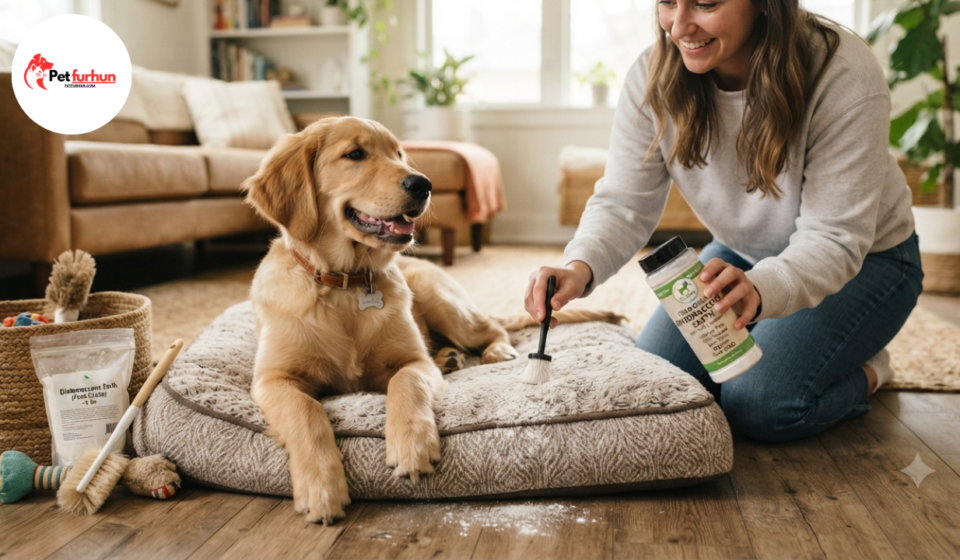
The safest way to use diatomaceous earth is to apply it carefully and avoid creating dust. Use only a small amount where it is needed instead of covering large areas unnecessarily.
Pets should be kept away during application. Allow the powder to settle before allowing animals back into the treated area. This reduces the chance of them breathing in loose particles or getting the powder on their fur.
Storage is also important. Keep diatomaceous earth in a sealed container and place it somewhere pets and children cannot access. Proper handling can reduce accidental exposure.
Can You Put Diatomaceous Earth Directly on Dogs or Cats?
Some online sources recommend applying diatomaceous earth directly to a pet’s coat to control fleas. However, this method should be approached carefully.
Dogs and cats naturally groom themselves, meaning they may swallow some of the powder after it is applied. There is also a risk of skin dryness and irritation, especially for pets with sensitive skin.
Veterinary flea and tick products are designed specifically for animals and are often a safer choice for direct treatment. If a pet has a flea problem, discussing options with a veterinarian can help identify the most effective solution.
Frequently Asked Questions
Is diatomaceous earth safe for dogs?
Food-grade diatomaceous earth can generally be used around dogs when applied carefully. Dogs should not inhale large amounts of dust, and pool-grade products should never be used.
Is diatomaceous earth safe for cats?
Cats can be more sensitive because they groom themselves frequently. It is best to avoid direct application on cats and use caution when applying it around the home.
Does diatomaceous earth kill fleas?
Diatomaceous earth may help control fleas in the environment, but it may not completely remove an infestation. A complete flea control plan usually involves treating the pet and cleaning the home.
Can pets breathe in diatomaceous earth?
Yes, pets can inhale the fine dust if it becomes airborne. This is why careful application and avoiding dust clouds are important.
What type of diatomaceous earth should pet owners use?
Food-grade diatomaceous earth is the type commonly used around homes and pets. Pool-grade diatomaceous earth should not be used for pest control around animals.
Can diatomaceous earth make pets sick?
Large exposure or inhaling dust may cause irritation. If a pet reacts after exposure, owners should stop using the product and contact a veterinarian.
Conclusion
Diatomaceous earth can be a useful natural pest control option when used correctly, but it should not be treated as completely harmless. Choosing the right product and applying it carefully are the most important steps for keeping pets safe.
Food-grade diatomaceous earth is different from pool-grade products, and avoiding unnecessary dust exposure can reduce risks. Pet owners should also consider whether it is the right choice for their specific pest problem.
A safe home is not only about removing pests but also about protecting the animals that live there. Careful use, regular cleaning, and professional advice when needed can help keep pets healthy and comfortable.