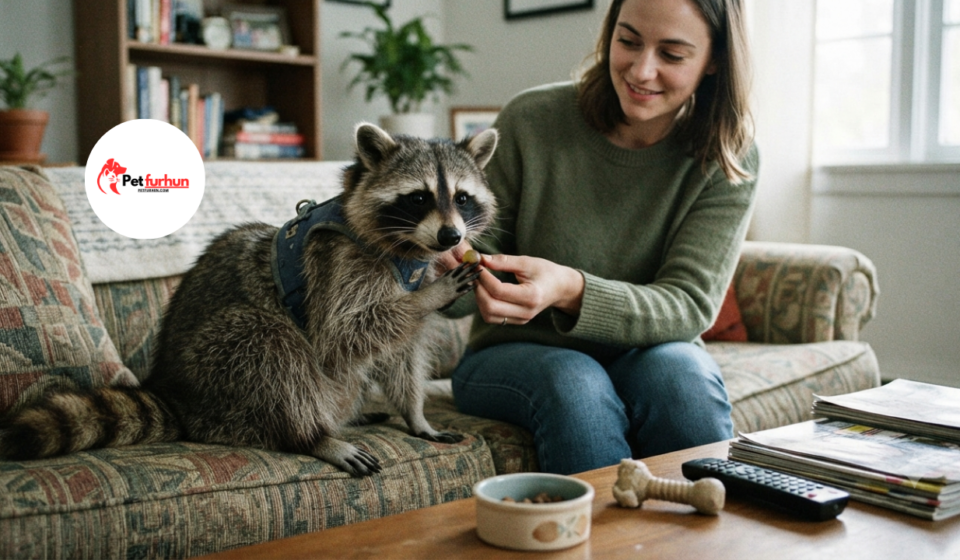

Raccoons are one of the most fascinating wild animals in North America. Their curious faces, clever behavior, and human-like hand movements often make people wonder if they could make good pets. Videos of friendly raccoons online have also increased interest among animal lovers who want to know if these animals can live safely with humans.
The answer is not as simple as yes or no. Raccoons can become comfortable around people, especially when raised from a young age, but they are still wild animals, not domesticated pets. Before considering a raccoon as a companion, it is important to understand their natural behavior, care needs, legal restrictions, and the challenges that come with ownership.
Are Raccoons Domesticated Animals?
Raccoons are not domesticated animals. Domestication happens over many generations when animals are selectively bred to live alongside humans, like dogs, cats, and some farm animals. Raccoons have not gone through this process, which means they still have their natural wild instincts.
A raccoon raised by humans may learn to trust its owner and interact with people, but it does not lose its natural behaviors. These animals are naturally curious, active, and independent. They explore their surroundings, search for food, climb, and use their strong paws to open and investigate objects.
This intelligence can make raccoons interesting to watch, but it can also make them challenging pets. A raccoon may open cabinets, damage household items, or create problems while exploring the home.
Why Do People Want Raccoons as Pets?
Many people are attracted to raccoons because they appear playful and intelligent. Their ability to solve problems and interact with their environment makes them seem similar to common pets. Some owners also enjoy the strong bond that can develop with a raccoon that has been raised around humans.
However, appearance and personality do not always tell the full story. A young raccoon may seem gentle and easy to handle, but its behavior can change as it grows older. Adult raccoons often become more independent and may show stronger natural instincts.
The idea of having a unique pet can be exciting, but owning a raccoon requires a level of commitment that many people do not expect.
Can Raccoons Be Good Pets?
For experienced wildlife caregivers, raccoons can be fascinating animals to work with. They are smart, active, and capable of learning certain behaviors. However, they are usually not considered suitable pets for most households.
Unlike dogs or cats, raccoons do not naturally adapt to human lifestyles. They need plenty of mental stimulation, space to explore, and activities that match their natural behaviors. Keeping them in a small area can lead to stress, boredom, and destructive habits.
Raccoons can also become difficult to manage because they are strong animals with sharp claws and teeth. Even a friendly raccoon may react defensively if it feels threatened or uncomfortable.
What Are the Challenges of Owning a Raccoon?
One of the biggest challenges is meeting a raccoon’s daily needs. These animals are naturally active and spend a lot of time searching for food and exploring their surroundings. A normal indoor environment may not provide enough space or stimulation.
Their diet is another important concern. Raccoons need a balanced diet, and feeding them only human food can cause health problems. Owners may need guidance from veterinarians who understand exotic animals or wildlife care.
Cleaning and safety can also become major issues. Raccoons are naturally messy because they investigate almost everything around them. They may move objects, tear into containers, and create damage while satisfying their curiosity.
Are Raccoons Dangerous to Keep at Home?
Raccoons are not naturally aggressive toward humans, but they are still wild animals that can behave unpredictably. Fear, stress, illness, or unfamiliar situations can cause a raccoon to bite or scratch.
Health risks are another concern. Raccoons can carry diseases and parasites that may affect humans and other animals. Rabies is one of the most serious concerns connected with wildlife exposure, and raccoons are among the wild animals that can carry the virus.
Because of these risks, people should avoid handling wild raccoons or attempting to keep them without proper knowledge and legal permission.
Is It Legal to Own a Raccoon?
Raccoon ownership laws are different depending on where you live. Some regions allow people to keep raccoons under specific conditions, while others completely prohibit private ownership of these animals.
Even in places where ownership is allowed, permits, veterinary requirements, and housing rules may apply. Anyone interested in owning a raccoon should check local wildlife regulations before making any decision.
Keeping a raccoon without permission can create legal problems and may also result in the animal being removed from your care.
Can a Baby Raccoon Become a Pet?
Baby raccoons often appear harmless and easy to care for, which is why some people attempt to raise them as pets. However, a young raccoon does not stay small and dependent forever.
As it grows, it develops the same instincts as a wild adult raccoon. It may become more active, independent, and difficult to manage inside a home.
If someone finds an abandoned or injured baby raccoon, the best option is usually contacting a licensed wildlife rehabilitator. These professionals know how to care for young animals and prepare them for life in the wild when possible.
What Is the Best Way to Help Raccoons?
Loving raccoons does not always mean owning one. Many people can support these animals by protecting wildlife areas, avoiding harmful interactions, and supporting local rescue organizations.
Watching raccoons from a safe distance allows people to enjoy their behavior without creating problems for the animal or themselves. Wild animals are often healthiest when they can follow their natural habits.
A raccoon’s intelligence and personality make it a remarkable creature, but those qualities do not automatically make it a good household pet.
Frequently Asked Questions
Can raccoons be kept as pets?
Some places allow raccoon ownership, but raccoons are still wild animals. They require specialized care and are not suitable pets for most people.
Are raccoons friendly with humans?
Raccoons can become comfortable with humans, especially when raised around people. However, they can still act like wild animals and may become defensive.
Do raccoons make better pets than dogs or cats?
No. Dogs and cats have been domesticated for thousands of years and are better adapted to human homes. Raccoons still have wild behaviors that can make ownership difficult.
Can a raccoon live inside a house?
A raccoon can physically live indoors, but a home environment usually does not meet its natural needs. They require space, enrichment, and specialized care.
What should I do if I find a baby raccoon?
Avoid taking it home immediately. Contact a wildlife professional or local animal rescue organization for proper guidance.
Conclusion
Raccoons are intelligent, unique, and fascinating animals, but they are not typical household pets. Their wild instincts, special care requirements, and possible health risks make ownership challenging.
While some people successfully care for raccoons under legal and controlled conditions, most homes are not suitable environments for these animals. Appreciating raccoons in their natural habitat is often the safest and most responsible choice.
Before bringing any wild animal into your home, it is important to consider what the animal truly needs, not only what humans want from a pet. A happy raccoon is usually one that can live according to its natural behavior.