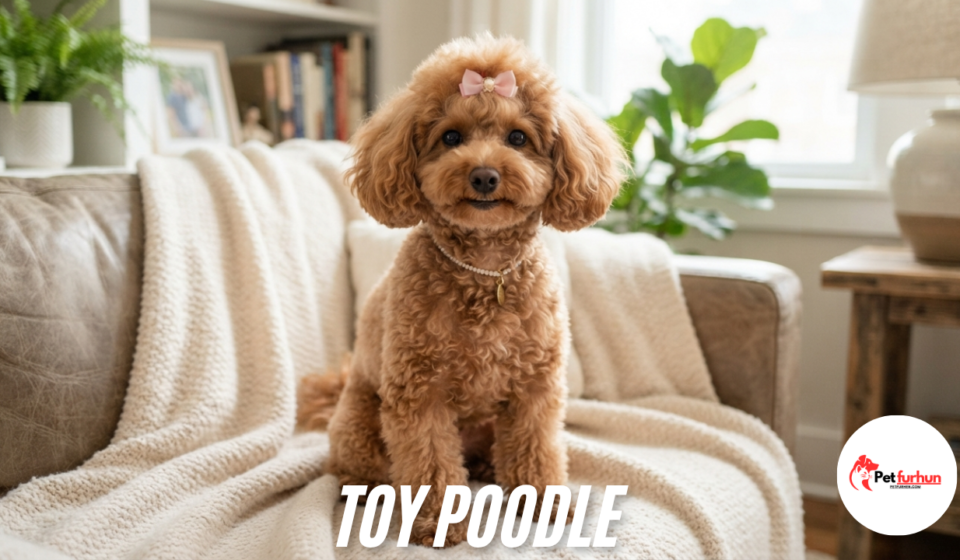

A Toy Poodle is one of those small dogs that can easily surprise people. At first glance, it looks delicate and decorative, but that impression changes quickly once you see how alert, smart, and active this breed really is. Many people search for Toy Poodles because they want a small companion that fits apartment living, but still brings energy and personality into daily life. The reality is that this breed is much more than a lap dog.
The Toy Poodle is known for intelligence, sensitivity, and strong attachment to its owner. It learns fast, picks up routines quickly, and often becomes deeply bonded with one person or family. That strong connection is one of the reasons it is such a popular choice around the world.
What a Toy Poodle Really Is
The Toy Poodle is the smallest version of the Poodle family, which also includes Miniature and Standard types. According to the entity[“organization”,”American Kennel Club”,”U.S. purebred dog registry”], Toy Poodles are usually under 10 inches tall and weigh around 4 to 6 pounds when fully grown. Even though the size is small, the breed still carries the same structure and personality traits seen in larger Poodles.
Originally, Poodles were working dogs used for water retrieval in Europe. Over time, breeders focused on smaller versions for companionship, and the Toy Poodle eventually became popular as a house pet. What changed in size did not change the intelligence or temperament of the breed, which is still very sharp and responsive today.
Appearance and Coat Characteristics
A Toy Poodle has a compact body, straight posture, and a proud way of carrying itself. The coat is one of its most recognizable features. It is curly, dense, and continuously growing, which means it does not fall out in the same way as many other breeds. Instead of shedding, the loose hair stays trapped in the curls until it is brushed or trimmed.
This coat comes in several colors including black, white, cream, apricot, and red. Many owners choose different grooming styles to manage the coat and keep it comfortable. While the styling can vary, the structure of the coat stays consistent across all Toy Poodles.
Personality and Behavior in Daily Life
The Toy Poodle is often described as alert and emotionally tuned in. It pays attention to movement, sound, and changes in its environment. This makes it a good companion for people who want a dog that is responsive and interactive throughout the day.
According to breed information referenced by entity[“organization”,”PetMD”,”veterinary pet health resource”], Toy Poodles are highly social dogs that prefer being close to their owners. They do not enjoy long periods of isolation and can become anxious if left alone frequently. This is not a quiet or distant breed; it actively seeks involvement in daily household life.
Their emotional sensitivity also means they respond strongly to tone and routine. Calm and consistent environments help them stay balanced, while unpredictable schedules can lead to nervous behavior.
Intelligence and Training Style
One of the strongest traits of the Toy Poodle is intelligence. It learns commands quickly and tends to understand patterns with very little repetition. This makes training easier compared to many other small breeds. However, intelligence also means the dog needs mental engagement to stay satisfied.
Training works best when it feels like interaction rather than strict repetition. Short, focused sessions often produce better results than long drills. The Toy Poodle enjoys solving problems and learning new tricks, which is why it often performs well in obedience and agility activities.
Without mental stimulation, boredom can lead to behaviors like barking or restlessness. This is not because the dog is difficult, but because it needs something to think about.
Exercise and Energy Levels
Even though it is small, the Toy Poodle is not a low-energy dog. It needs regular activity to stay balanced. Short walks, indoor play, and light games are usually enough, but they need to happen consistently.
The breed does not require large outdoor spaces, which is why it fits well in apartments and smaller homes. However, physical exercise alone is not enough. Mental stimulation is equally important. Interactive toys or learning-based games often help burn energy in a more effective way than long walks alone.
When both physical and mental needs are met, the Toy Poodle tends to stay calm and well-behaved indoors.
Health and Lifespan Expectations
Toy Poodles generally live long lives compared to many other breeds. Many reach 12 to 15 years, and some live beyond that with proper care. Their small size contributes to longevity, but it also brings certain sensitivities.
Common concerns in the breed can include dental issues, eye conditions, and joint-related problems. Regular veterinary visits and consistent care help manage these risks early. Because of their size, they are also more delicate physically, which means rough handling or accidental drops can cause injury.
A stable diet, dental care, and regular checkups are important parts of maintaining their health over time.
Living With a Toy Poodle
Living with a Toy Poodle means adapting to a dog that wants involvement. It is not the type of pet that stays in the background. It follows movement, reacts to sound, and often tries to stay close to its owner throughout the day.
It adapts well to apartment living, but it does best in homes where someone is present most of the time. Long hours alone can lead to stress or unwanted behavior. Early socialization also plays a big role in how confident the dog becomes around strangers and new environments.
Grooming is another major part of ownership. The coat grows continuously, so regular brushing and trimming are needed. Many owners rely on professional grooming every few weeks to keep the coat manageable and clean.
Conclusion
The Toy Poodle is a small dog with a strong personality and a high level of intelligence. It fits well in modern living spaces, especially where companionship and interaction are part of daily life. While its size makes it easy to handle, its emotional and mental needs require real attention.
This is a breed that rewards consistency. When given structure, companionship, and mental engagement, the Toy Poodle becomes a loyal and responsive companion that adapts closely to its owner’s lifestyle. It is not just a small pet—it is an active presence in the home that notices everything and stays deeply connected to the people around it.
petfurhen.com